


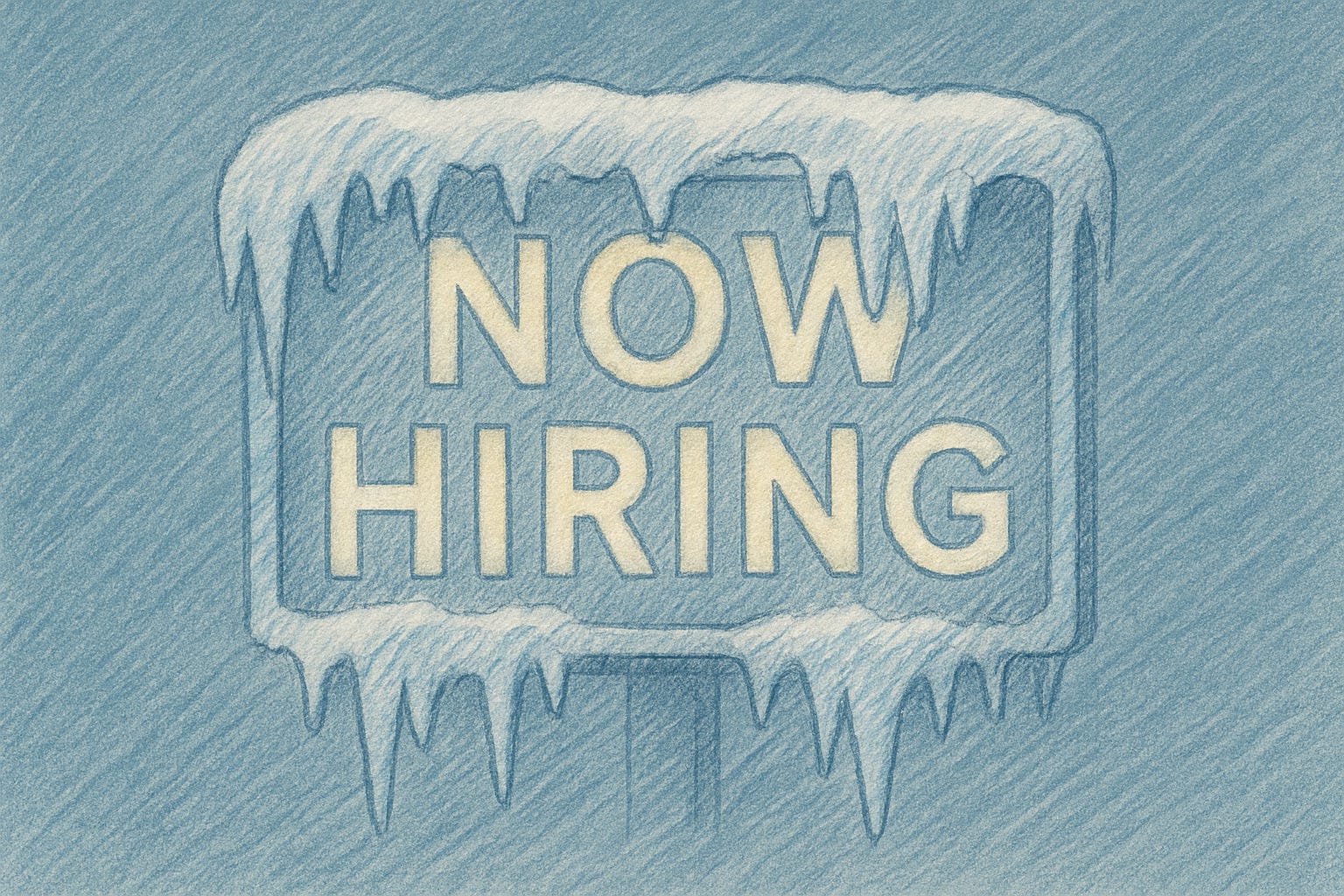
UK job vacancies have fallen by 63,000 over the last quarter — down 7.9 percent between March and May 2025 — sending the total number of available roles to just 736,000, the lowest level since the pandemic and marking the thirty-fifth consecutive quarterly decline. As confirmed in the ONS June 2025 bulletin, employers are holding back on hiring or are not replacing workers who leave, and the number of payrolled employees dropped by 55,000 in a single month. The unemployment rate has edged up to 4.6 percent — the highest in nearly four years. Labour market analysts warn that demand is clearly weakening, and that many firms are choosing caution in response to rising National Insurance costs, minimum wage hikes, and continued economic uncertainty.
This shift is more than a reaction to short-term volatility. With employer National Insurance Contributions now at 15 percent, adding about £780 per £50,000 salary, and higher wage floors for skilled worker visas in force, boards are recalibrating workforce planning. Many now see cost containment — including slow or paused hiring — as the default. “There continues to be a weakening in the labour market,” says ONS director Liz McKeown, pointing to both the drop in available jobs and the significant fall in payrolls. In practice, most companies now back-fill only the most business-critical roles and leave other positions vacant for extended periods.
But as more firms lean into defensive hiring strategies, there is growing concern that short-term restraint could produce longer-term risks. Chronic under-hiring is not a sign of health. Instead, it may quietly erode productivity, delay projects, and expose organisations to financial and operational risks that remain invisible until they materialise in the balance sheet. The thirty-five consecutive quarters of falling vacancies are less a sign of stability and more an early warning of capability loss.
“One client lost the same candidate twice due to delays, and it set their digital rollout back by a few months.”
— Sharon Armstrong, Armstrong Appointments
A PageGroup × CEBR survey of 100 large UK employers found that unfilled roles are costing at least £132.6 million in lost productivity each year, with six working weeks lost per organisation. For sectors with complex, highly skilled roles — such as energy — the figures are even starker. Astute People recruiters estimate the daily cost of a vacancy at £2,505, and the average time to fill key engineering posts at 67 days. That adds up to more than £167,000 in lost revenue for every empty seat. In a recent anonymised renewables case, the delay in replacing a project manager set back a 300 MW wind-farm by nine weeks — incurring around £14 million in forecast revenue slippage.
Public sector productivity faces similar threats. The Centre for Economics and Business Research (CEBR) warns that, without improvements, government may need to hire 92,000 extra staff by 2030 — adding as much as £5.1 billion to the public payroll. Even as the headline number of vacancies declines, the ONS June release shows that demand for talent remains well above the pre-pandemic baseline — suggesting that many organisations are choosing not to fill roles, rather than seeing a genuine surplus of candidates.
The vacancy illusion — fewer postings, declining payrolls, and longer periods with empty seats — does not mean the market is in balance. Often, it reflects under-hiring and unmeasured capability loss. Overtime spend, burnout, and project delays are the hidden price paid for short-term restraint. The indirect drag on output and future growth can be profound — not just for current performance, but for the ability to recover and compete when conditions change.
Productivity, innovation, and human impact —
When critical roles remain unfilled, the ripple effects across your teams are immediate and, if left unchecked, deeply corrosive. Chronic under-hiring forces more responsibility onto your existing staff, often leading to burnout, disengagement, and higher turnover — risks that can quietly undermine your organisation’s ability to deliver, adapt, or innovate.
Simon Fabb, CEO of ChiefJobs.com, notes the consequences directly:
“If hiring freezes and under-recruitment persist over the next three years, businesses risk facing serious talent shortages that could stunt growth and innovation. When key roles remain unfilled, workloads pile up, leading to burnout and high turnover among existing staff. This brain drain not only reduces productivity but also erodes institutional knowledge, making it harder for companies to stay competitive.”
This is particularly acute in sectors with fast-moving skills cycles. As Sharon Armstrong of Armstrong Appointments explains: “We’ve seen a few clients delay hiring for key IT roles like cloud, DevOps, and cybersecurity in an effort to manage costs. But in many cases, it ends up causing knock-on issues. Projects slow down, teams feel the pressure, and by the time the role is reopened, salary expectations have shifted or the right candidates have moved on. One client lost the same candidate twice due to delays, and it set their digital rollout back by a few months.”
Wider research underscores these risks. Korn Ferry forecasts an $8.5 trillion revenue hit globally by 2030 from unfilled skilled roles — an estimate that includes the UK’s professional-services sector. Public sector projections suggest that, unless efficiency is restored, governments could be forced to hire tens of thousands of extra staff just to maintain service levels, at a cost of billions.
For your board, the implications are clear: delayed hiring may provide short-term budget relief, but the resulting gaps in capability, morale, and knowledge are likely to surface later — just as your organisation needs to respond quickly to new opportunities or threats.
Boardroom calculus —
Executive teams across the UK are reassessing their hiring strategies as statutory costs rise and policy uncertainty continues. Recent surveys by the Bank of England and CIPD confirm that most companies are now limiting hiring to only the most essential roles, often back-filling only when absolutely necessary. Alongside the growing cost of employment, more boards are turning to contingent models and automation.
Quentin Debavelaere, General Manager of North Europe at Malt, describes the strategic dilemma: “The key challenge is that while some macroeconomic indicators — such as AI-driven productivity gains — offer a sense of optimism, UK-specific factors are creating headwinds for hiring. The recent 1.2% increase in National Insurance contributions, for example, has had a more significant impact than many employers initially anticipated, particularly for larger companies. With ongoing concerns about additional employment taxes and reduced hiring flexibility, many businesses remain hesitant to commit to permanent roles.”
This environment is driving more employers to consider non-permanent solutions. As Debavelaere notes, “Of course, contract and temporary hires offer an attractive alternative. Freelancers and consultants, in particular, have become a more viable option because they are not affected by the National Insurance increases. Additionally, with lower demand from employers, contract rates have not kept pace with inflation, making them a more cost-effective solution. However, this approach is less straightforward, as the government is increasingly scrutinising and penalising ‘fake freelancing’ or the misclassification of temporary workers with IR35.”
With such structural constraints in play, Debavelaere points to the disconnect between national sentiment and real hiring decisions: “The disconnect between national economic confidence and hiring decisions can be attributed to structural factors — while overall sentiment may improve, employers are making decisions based on immediate, tangible costs and risks. For HR leaders, the unstable hiring landscape means balancing workforce agility with compliance. The focus should be on strategic workforce planning, ensuring businesses remain competitive while mitigating long-term cost risks. Employers looking to use independent talent should have robust status-determination processes in place and should consider working with specialists to avoid potential legal pitfalls.”
He advocates for a blended strategy, warning boards against simply waiting for market stabilisation: “Ultimately, while waiting for economic stabilisation may seem like a safe approach, delaying hiring decisions could mean missing out on top talent. A blended workforce strategy, incorporating both permanent and contractor roles, is the best path forward.”
“While strategies in continuous professional development can offer short-term relief, they often act as mere ‘sticking plasters’ against the deeper issue of long-term talent drain.”
— Michael Doolin, Clover HR

Some boards are now taking this advice, focusing not only on cost but also on long-term adaptability. Alongside increased investment in automation and process redesign, a renewed focus on upskilling and internal mobility is emerging. In a Robert Walters review, 85 percent of UK firms planned to invest in upskilling during hiring pauses, with internal mobility programmes leading to employees reaching competency 20 percent faster and boosting retention. For leaders, the challenge is not just filling seats, but weighing the hidden costs and risks of leaving them empty.
Michael Doolin, CEO of Clover HR, puts it plainly: “While strategies in continuous professional development can offer short-term relief, they often act as mere 'sticking plasters' against the deeper issue of long-term talent drain. A more sustainable approach requires businesses to eliminate self-inflicted surprises that exacerbate these gaps and plan and prepare for the future.”
From cost saving to capability strategy —
So how can your board avoid turning a necessary cost-saving exercise into an own goal? First, audit the real cost of vacancy by function. For critical roles, quantify not only lost revenue but also the impact on project timelines, client delivery, and staff morale. Second, scenario-model the tipping point: how long can you safely run with key roles empty before the risks compound? Where are you already seeing signs of capability bottlenecks or increased churn?
Joel Marotti, Senior Managing Partner at Vertical Media Solutions, warns against letting hiring freezes undermine future readiness:
“Continued hiring freezes pose a significant threat to organisational agility and long-term workforce planning. Without fresh talent entering the pipeline, companies may struggle to bring in new perspectives and skills that drive innovation and adaptability. This stagnation can also affect employer brand perception, making it harder to attract quality candidates when recruitment resumes.”
He suggests that “to counteract these risks, businesses should focus on building strong talent pools and nurturing relationships with potential hires through proactive sourcing and engagement. Leveraging technology like AI-driven recruitment platforms can streamline candidate identification and improve hiring efficiency when demand picks up. Additionally, internal mobility programs can unlock hidden potential by repositioning existing employees into new roles that align better with future business needs. Strategically managing talent pipelines now will safeguard organisations against the costly impact of prolonged under-recruitment.”
Third, benchmark your approach. PeopleScout data shows that internal mobility not only boosts retention but also speeds up time-to-productivity — 93 percent of internal hires stay longer, and reach effectiveness 20 percent faster. Programmes like Aviva’s vocational rehabilitation have preserved skilled capacity during pauses, with 86 percent of supported employees returning to work.
Finally, compare the total costs and benefits of outright freezes versus strategic flexibility. Outright freezes may deliver a cleaner line on OPEX in the short term, but risk deeper long-term drag on growth, resilience, and culture. Strategic alternatives — contingent talent, upskilling, and targeted job redesign — offer boards a way to flex without starving the future.
The bottom line —
Delaying recruitment may seem prudent in a high-cost environment, but every empty seat left too long becomes a slow leak of capability, innovation, and competitive edge. The UK’s new vacancy data offers a warning — strategies set in the boardroom today will shape organisational performance for years to come.
Now is the time to audit, model, and challenge your hiring pause assumptions. By making evidence-led adjustments and sharing what works, you can help your board — and your sector — build resilience for the cycles ahead.